Agree the load
What pressure the team is carrying, where it concentrates, and which signals we want to watch before we start.
Leadership under pressure
A leadership programme built on how castells actually work: structure, load, trust and the decisions you make when the weight arrives.
The pressure
Growth weighs. Reorganising weighs. AI weighs. And the square does not forgive a structure that only looked solid from a distance.
Team pressure map
The shape in the logo doubles as a way to look at your team: who absorbs the blows, who carries the visible work, and what cannot go up until the base is ready.
From rehearsal to the square
Lifting a castell only matters if something changes in how you work afterwards. Hence three steps: agree what to look at, test it together, and take it back to the real work.
What pressure the team is carrying, where it concentrates, and which signals we want to watch before we start.
One single structure. Visible roles. Enough physical tension for the real habits to surface, not the meeting-room ones.
The final map leaves concrete questions for the weeks that follow: who holds, who carries, and what should not go up yet.
The entry programme
The first physical test of how your team organises itself with weight on top. It is the first module of the method: it starts with a diagnosis and ends with a follow-up plan.
Where this comes from
Pinyacle invented none of this. Castells are a collective tradition centuries old: what we add is a way of bringing it to a leadership team.
Pinyacle is a project led jointly by Josep Francesc Cortès and Fèlix Miret. We share a background in castells and a conviction: teams take shape when everyone understands what they contribute and who they can rely on.
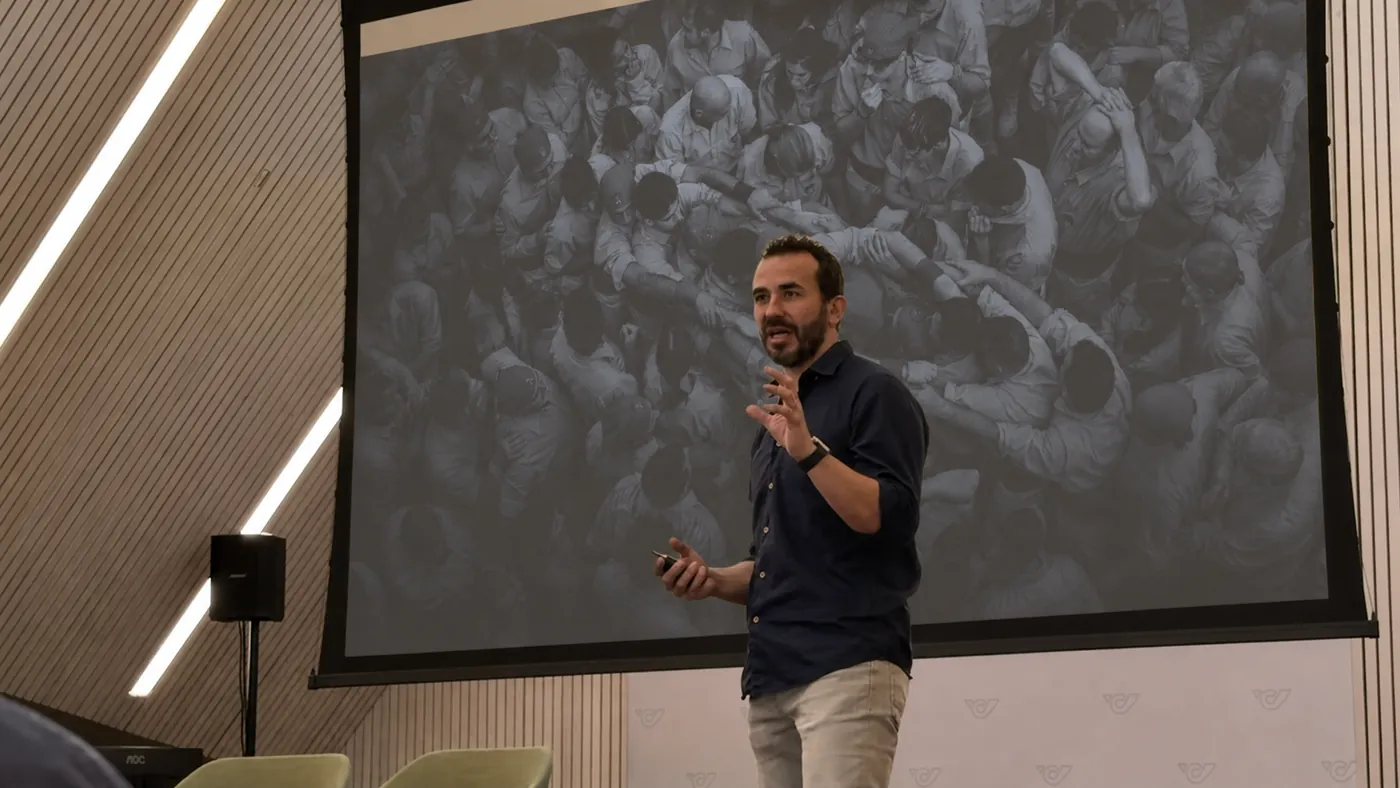
Leadership and operations
A casteller, former cap de colla — the leader of a human-tower team — and technology operations professional. Josep Francesc brings a practical perspective on structure, coordination and decisions under pressure.
Turning the experience into decisions, responsibilities and changes the team can bring back to work.

Facilitation and human-tower experience
A facilitator and group-dynamics specialist, Fèlix has spent more than thirty years bringing castells to schools, visiting groups and organisations around the world.
Helping people with different backgrounds take part, trust one another and build something together.